
Eclipse solar total sobre Cirauqui, Navarra // Total solar eclipse over Cirauqui
(for English please scroll to the bottom of the page)
Han pasado unos días pero aún me cuesta resumir en palabras la experiencia vivida. Nunca había presenciado un eclipse TOTAL de sol; hace algo más de un año hubo uno parcial, pero el día estaba muy nublado y apenas pude captar casi por casualidad uno o dos disparos a través de las nubes. Pero un eclipse parcial y uno total no tienen nada que ver: ver uno parcial es algo especial y fuera de lo común, sin duda, pero presenciar la fase de totalidad, aunque sea por unos segundos, es algo increíble. Llevaré esos 40 segundos para siempre conmigo.
Y quiero agradecer antes de nada a mi familia el haber querido acompañarme a vivir esa tarde conmigo mientras lo fotografiaba.
Empecé a preparar este eclipse hace en torno a un año. Ante todo quería tener libres el día del eclipse, el anterior y el posterior, por lo que me aseguré esos días en el trabajo. Luego había que buscar desde dónde haría la foto o fotos, por lo que a lo largo de varios meses fui recorriendo varias zonas en el entorno de Estella, buscando ubicaciones adecuadas; pero ninguna me convencía totalmente, y además había una que era la que más se repetía en mi cabeza siempre que me imaginaba ese día: la caída de ese sol eclipsado sobre Cirauqui, el pueblo donde trabajo. Por tanto rápidamente me centré en encontrar la ubicación exacta entre Mañeru y Cirauqui de forma que el sol cayera justo por encima de la torre de la Iglesia de San Román. No obstante, preparé dos ubicaciones adicionales como «plan b» en caso de que el día 12 de agosto la climatología no colaborara con el plan principal. Finalmente no hizo falta, pues el cielo «se portó» y no hubo una sola nube en toda la tarde del día del eclipse.
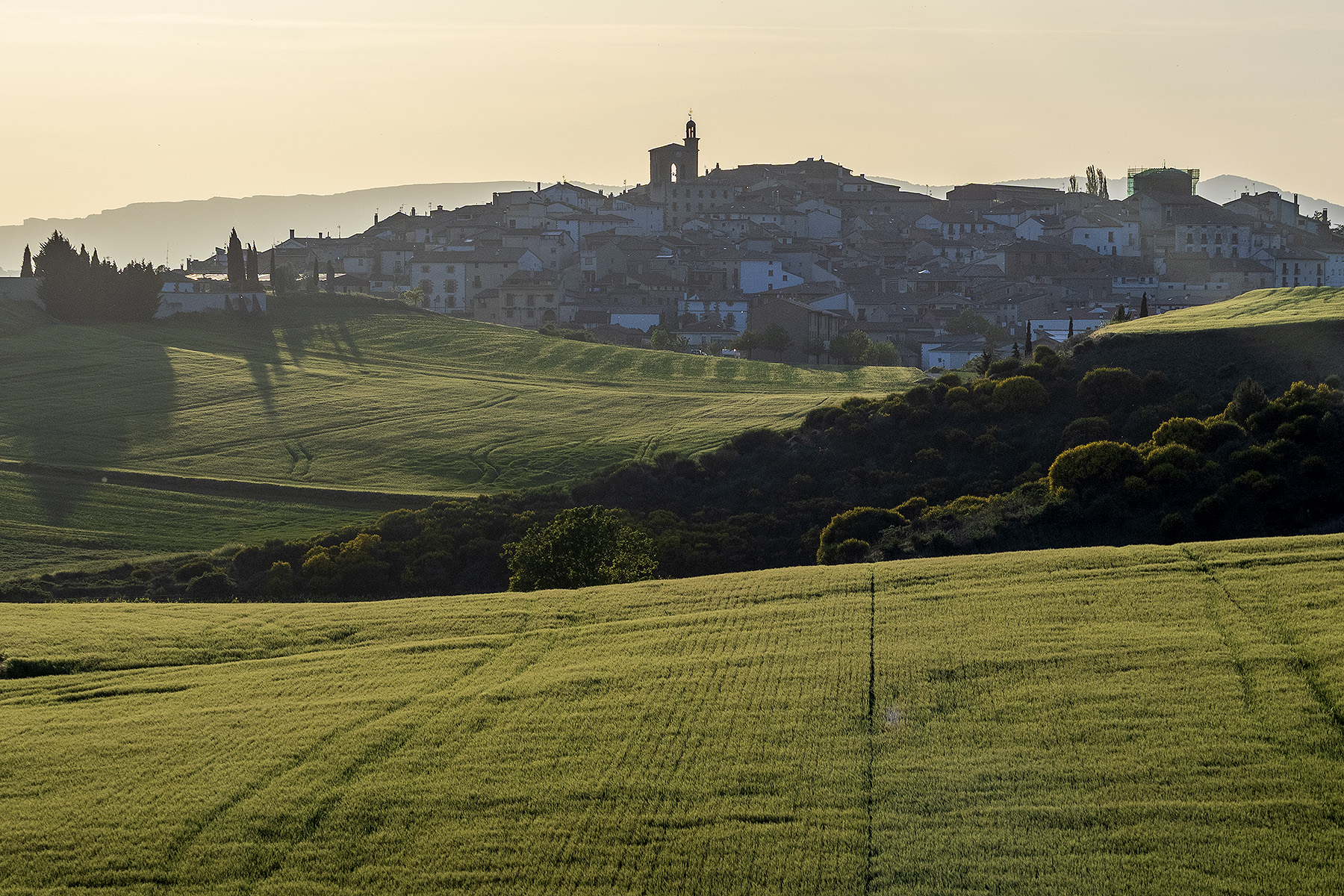
Más o menos esta sería la vista del pueblo desde la ubicación que elegí; para ser perfecta solo hacía falta que acabaran a tiempo las obras de reparación de la cubierta de la Iglesia de Santa Catalina, situada a la derecha, y así fue:
Luego vino la preparación técnica: aún no sabía cómo se hacía exactamente, pero estaba seguro que fotografiar un eclipse total no era como fotografiar ninguna otra cosa que yo hubiera hecho hasta ahora, ni siquiera un primer plano del sol o la luna sobre el horizonte, como en la última imagen de este post o en la primera de este otro.
Así que tocaba que empaparse de muchos artículos en blogs, redes sociales, y sobre todo vídeo tutoriales en youtube. De todos ellos el que marcó la diferencia, a un par de semanas del día «D», fue el vídeo de la masterclass de Photopills y en particular del maestro Antoni Cladera: si tenéis que fotografiar un eclipse total en el futuro, os recomiendo encarecidamente que os lo veáis de principio a final, varias veces y hasta tomando notas. Además Antoni se prestó a contestar varias de mis dudas a través de redes sociales y correo electrónico, por lo que le estoy eternamente agradecido. También tuve ayuda técnica y «moral» de otro fotógrafo y youtuber, Nacho Uliaque, cuyo canal y redes sociales también recomiendo. Y en cuanto al filtro que utilizaría durante las fotos de la fase de totalidad, tengo que agradecerle el asesoramiento a Jorge Císcar, que también me respondió dudas por email muy amablemente. Por último un agradecimiento al Ayuntamiento de Cirauqui, que se avino a colaborar conmigo en todo lo que le solicité. Gracias a todos.
Aunque dudé mucho, finalmente decidí utilizar las tres cámaras que tengo; sabía que sería mucho estrés y que multiplicaría las posibilidades de que algo saliera mal, pero me parecía una pena dejar una o dos cámaras sin usarse ante un evento astronómico como el que iba a presenciar, sin sacarle algo más de provecho fotográficamente hablando. Así que decidí que pondría dos de las cámaras en sendas ubicaciones, haciendo fotos secuenciales automáticamente, sin apenas supervisión mía: si salía algo de esas fotos estupendo, y si no, al menos lo habría intentado…
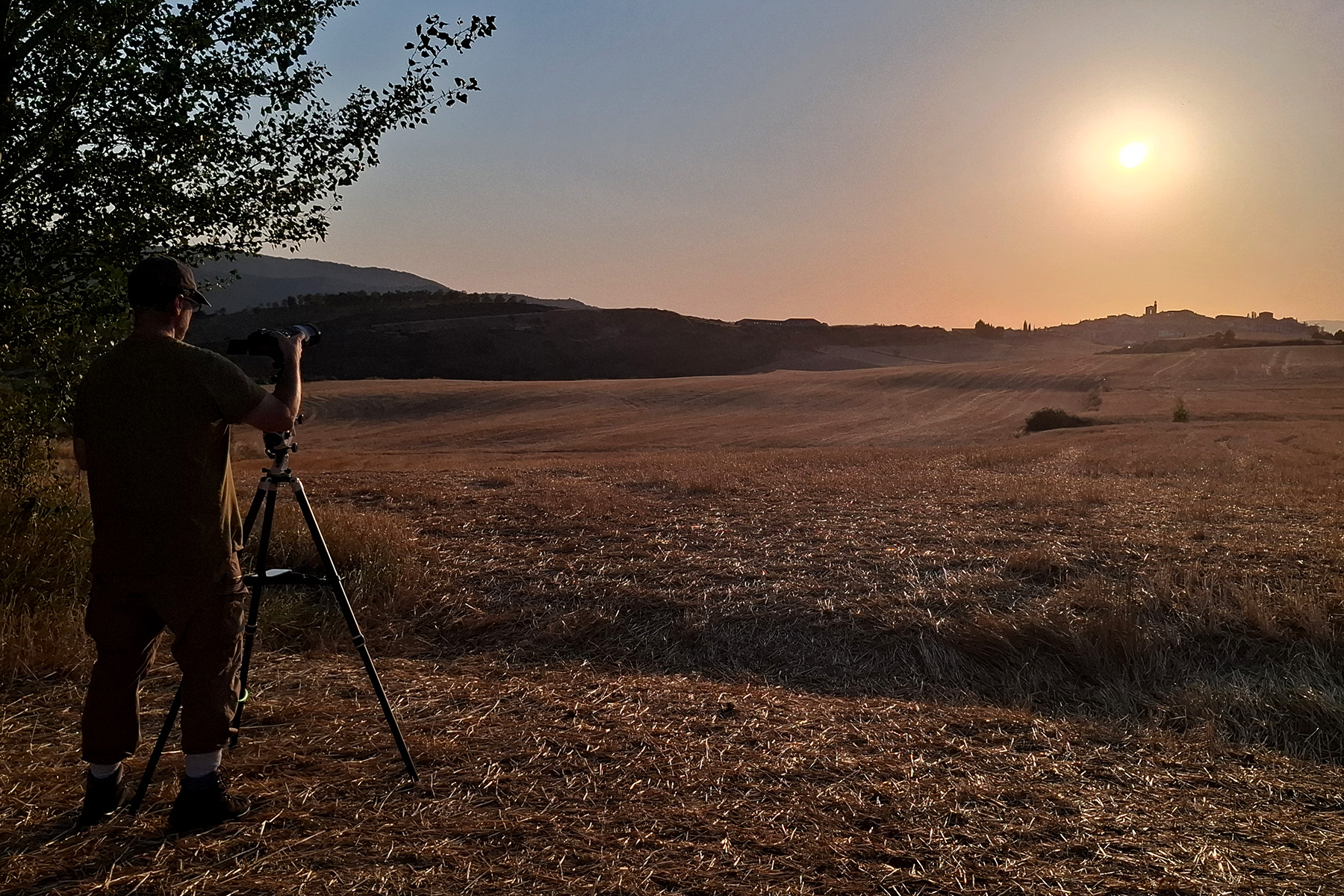
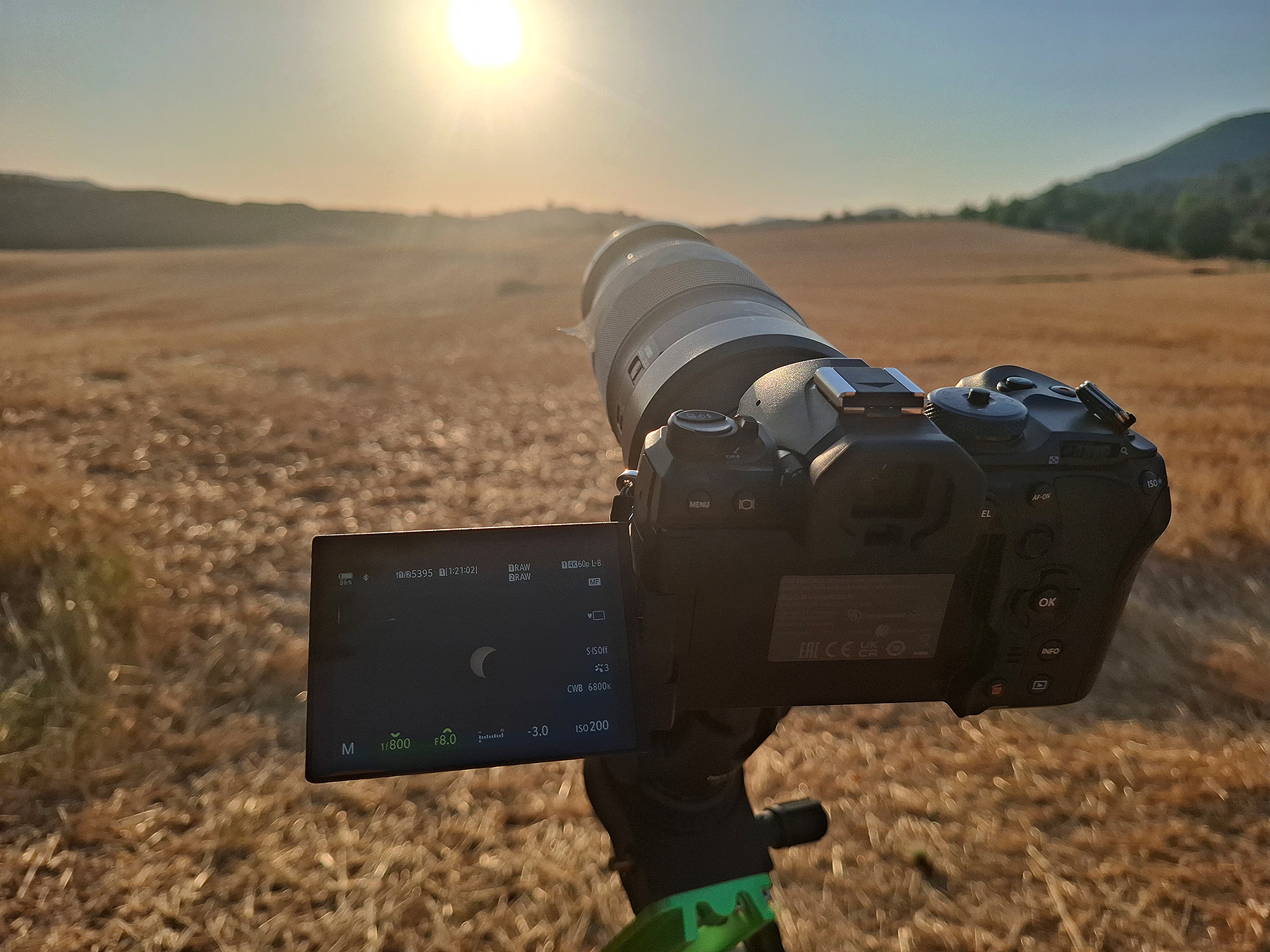
Yo estaría centrado en una tercera cámara sobre un trípode, con un teleobjetivo apuntando todo el tiempo al sol para ir fotografiando todas las fases del eclipse, desde el inicio a las 19.32h hasta que se ocultara tras el pueblo poco después de las 21.00h, aún parcialmente eclipsado. Dos veces corrí hasta las otras dos cámaras para comprobar que todo estuviera yendo bien, o si necesitaban que les cambiara la batería o tarjeta de memoria, pero salvo un pequeño susto, todo fue bien y casi sin incidencias.
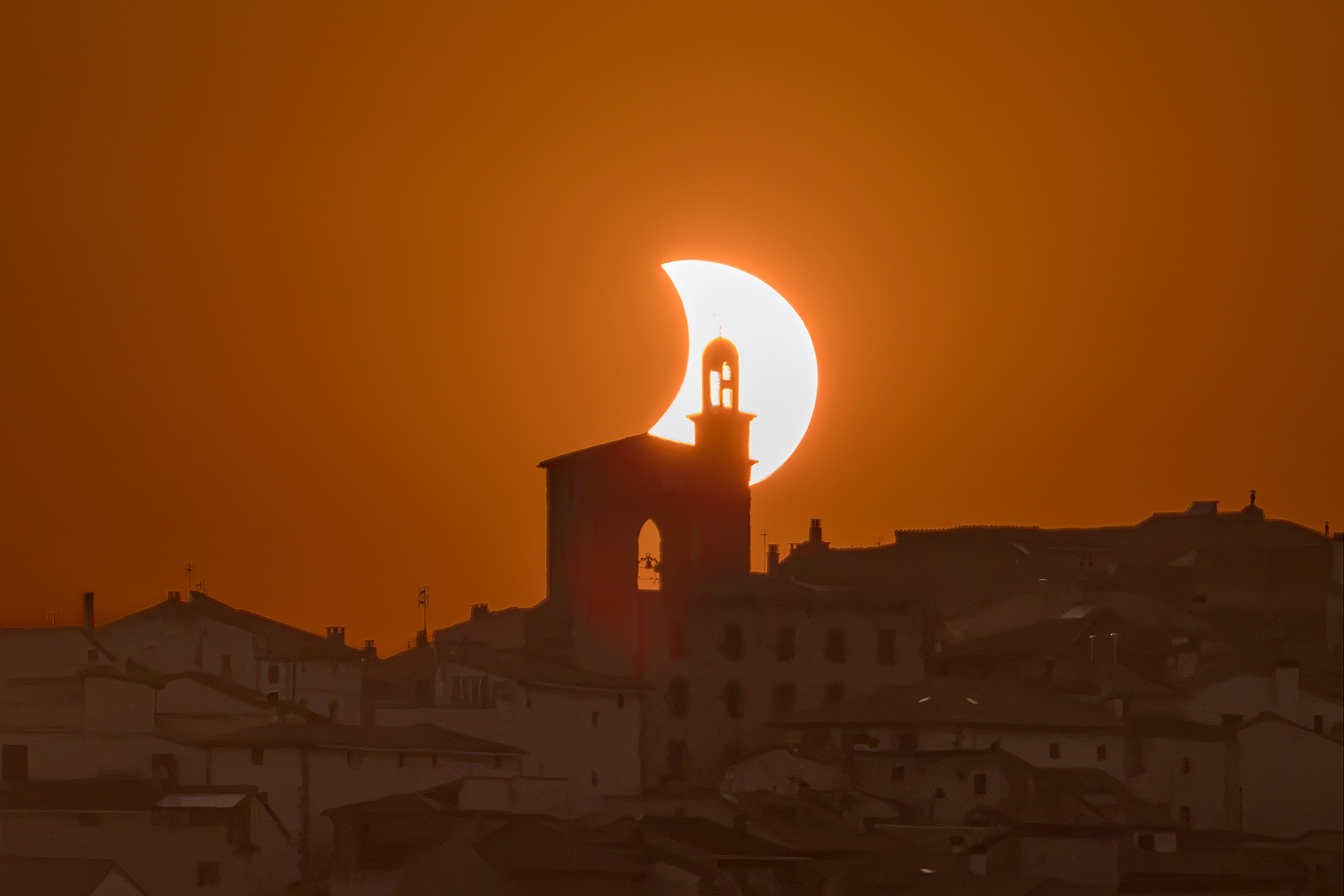
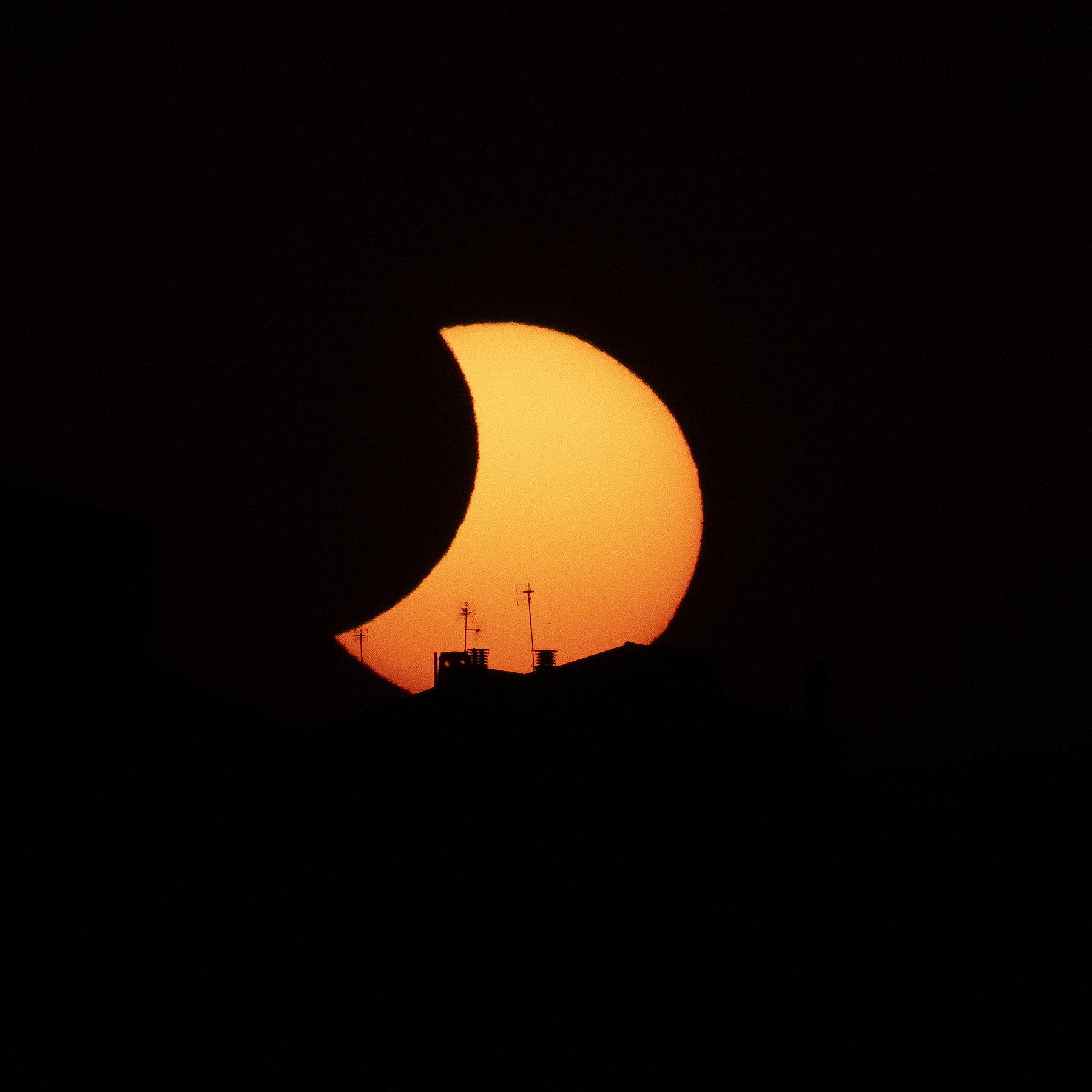
Os dejo algunas fotos de esa tarde, empezando por esta del sol a punto de ocultarse, aún parcialmente eclipsado, sobre la Iglesia de San Román de Cirauqui:
La imagen anterior es una de las que componen este time lapse:
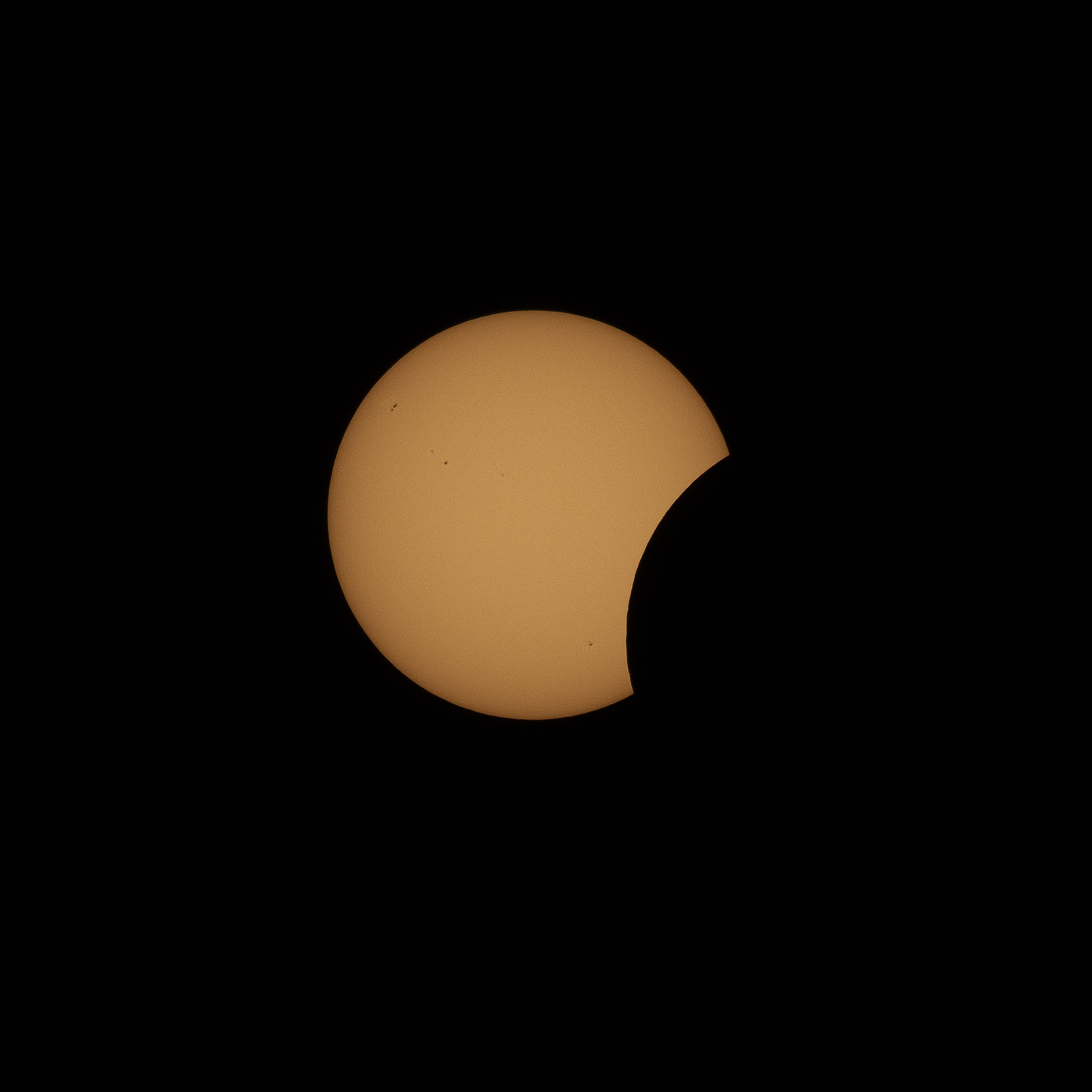
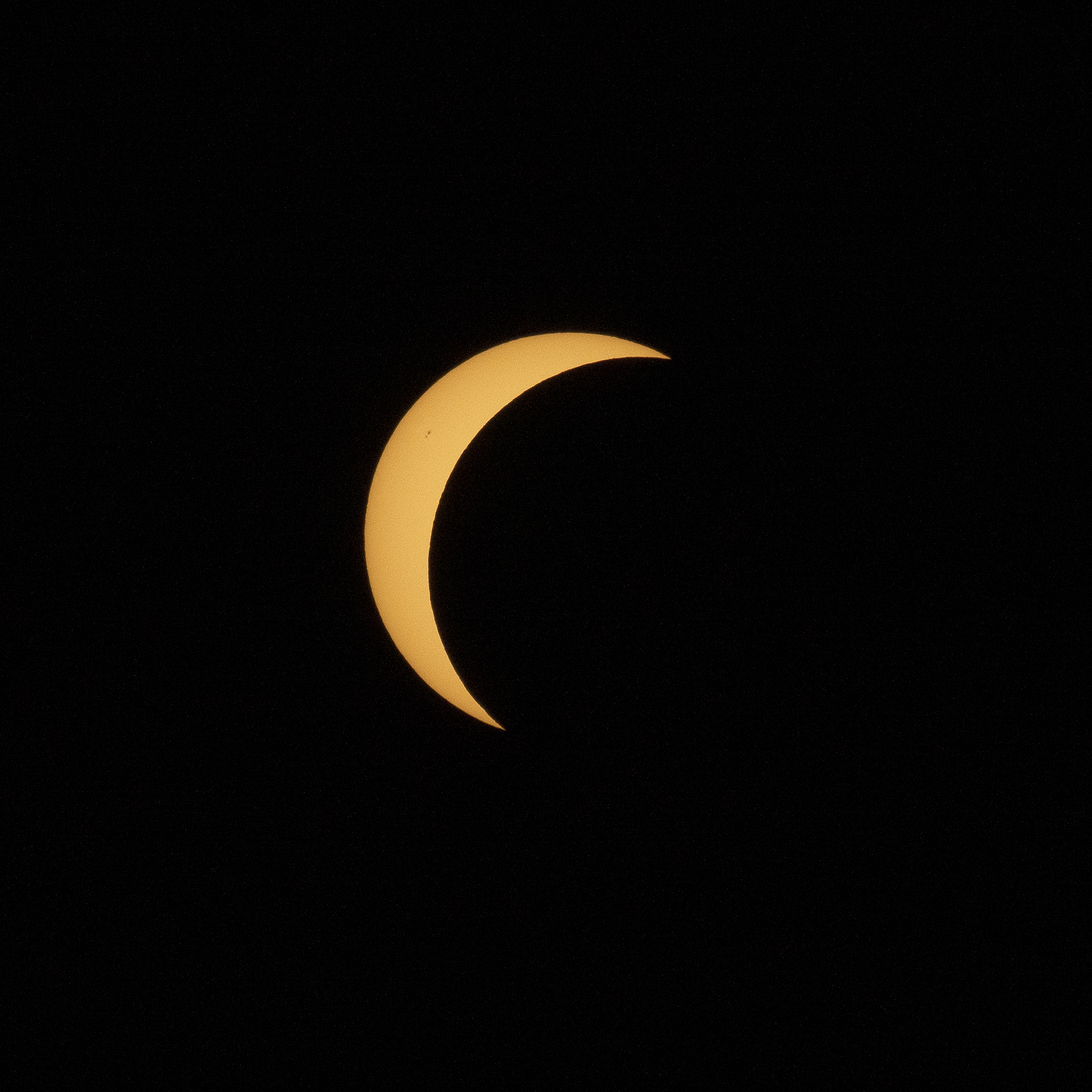
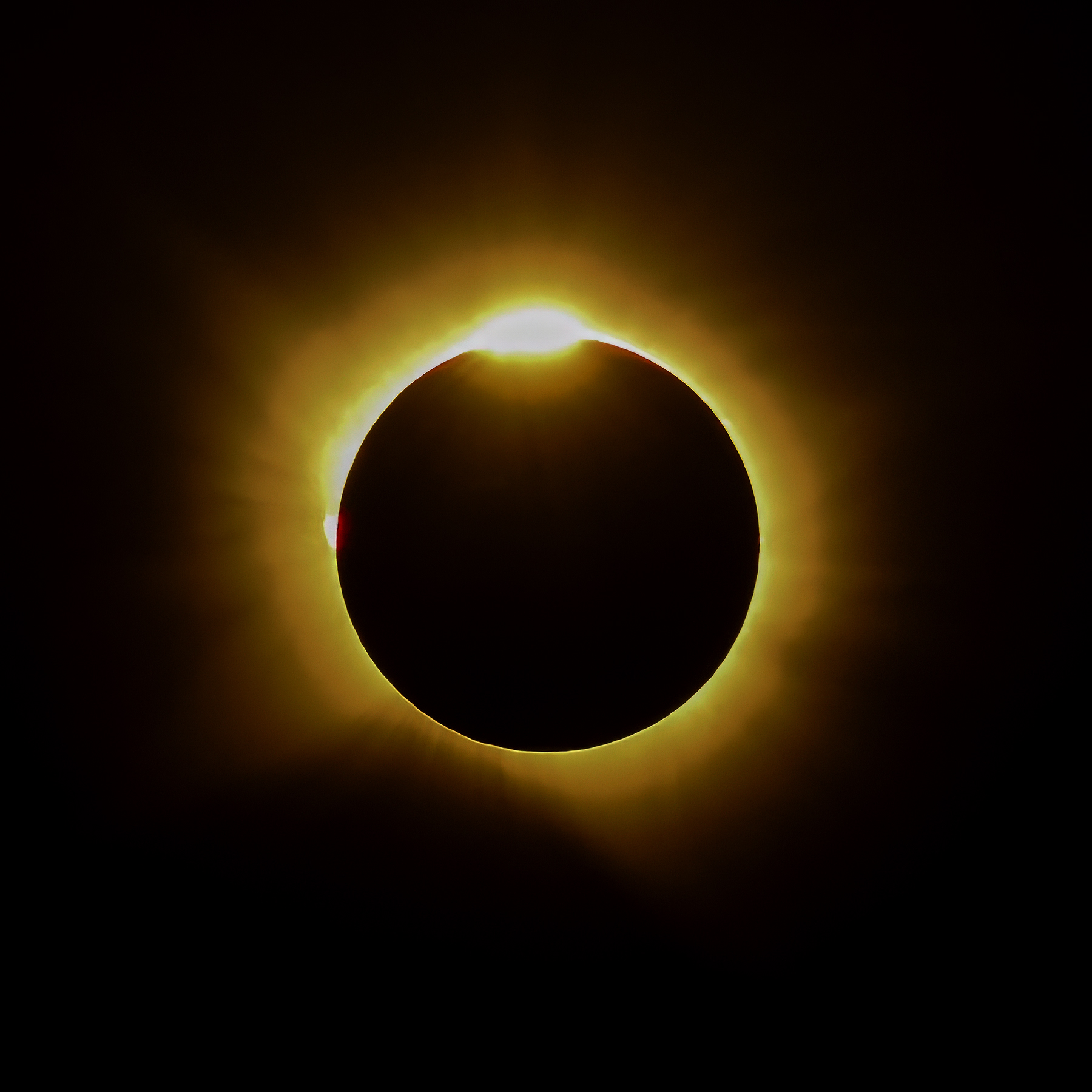
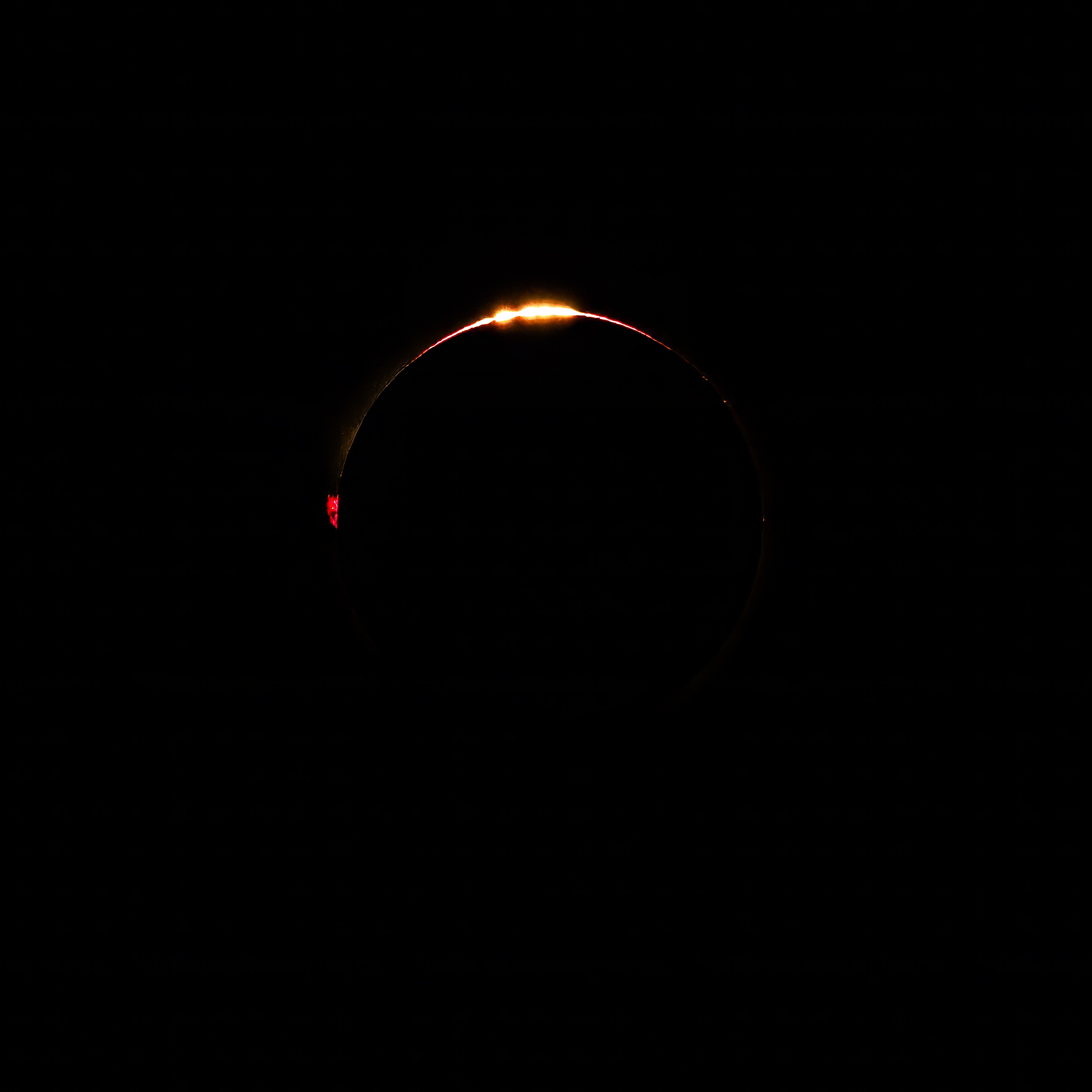
Aquí os dejo una secuencia de las fases del eclipse:
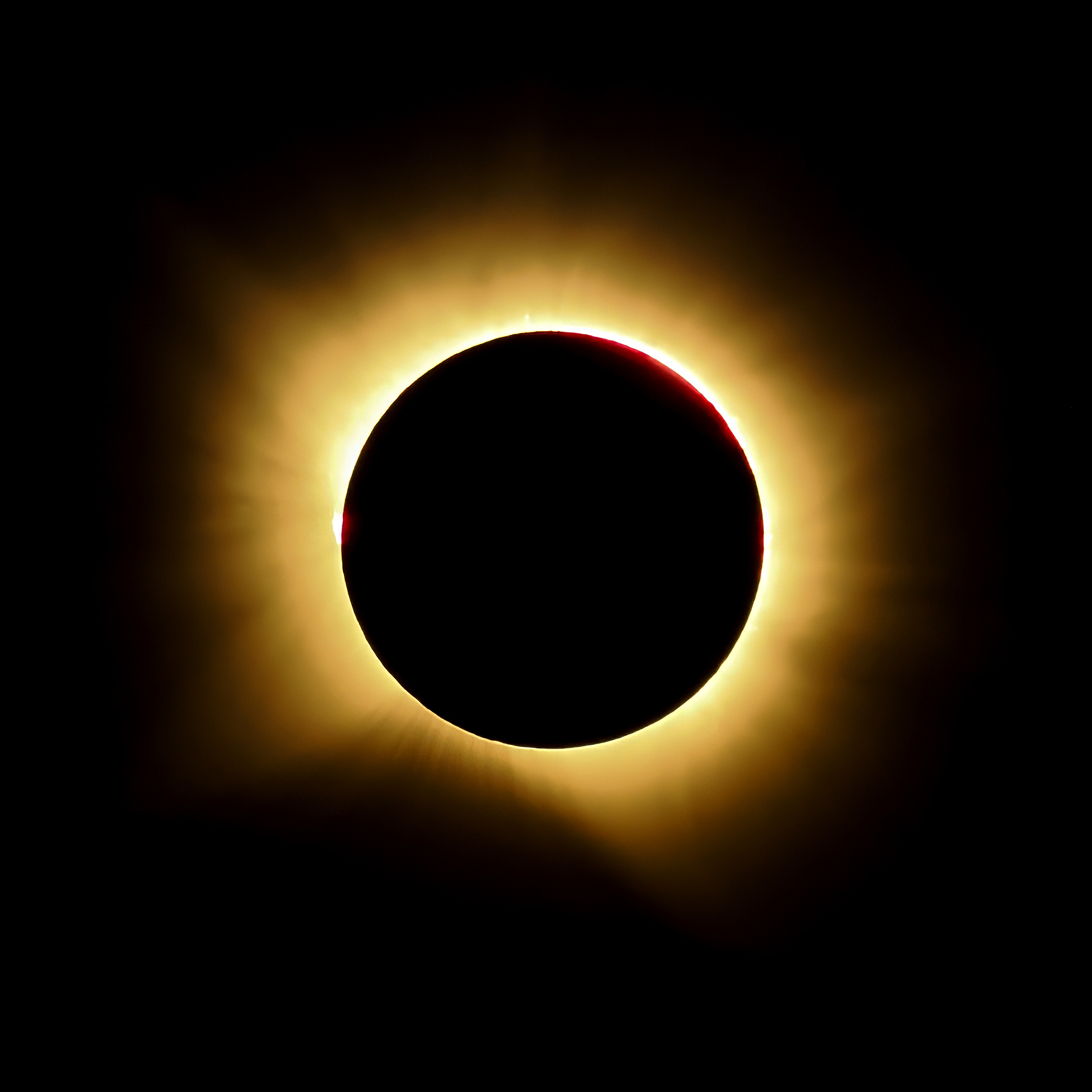
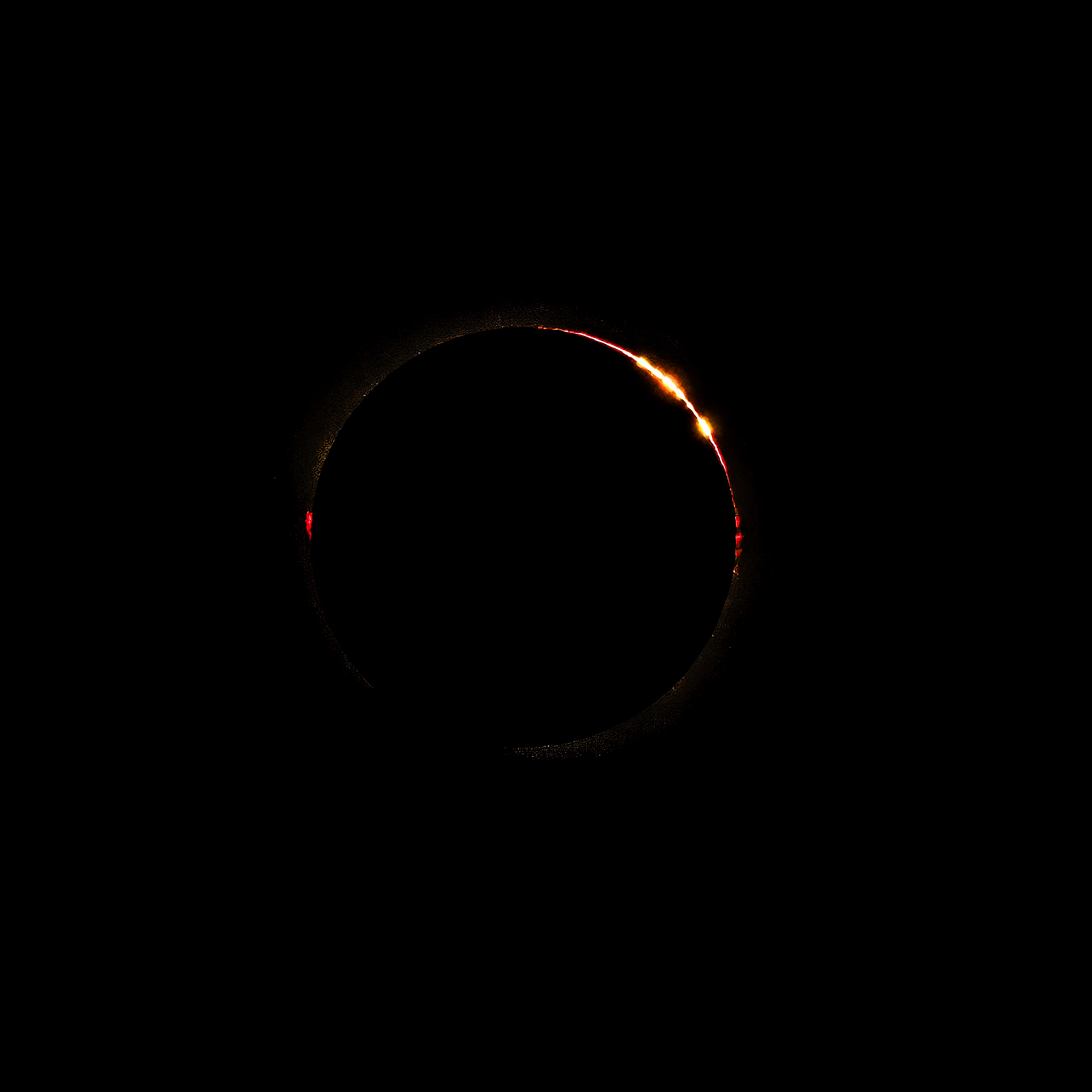
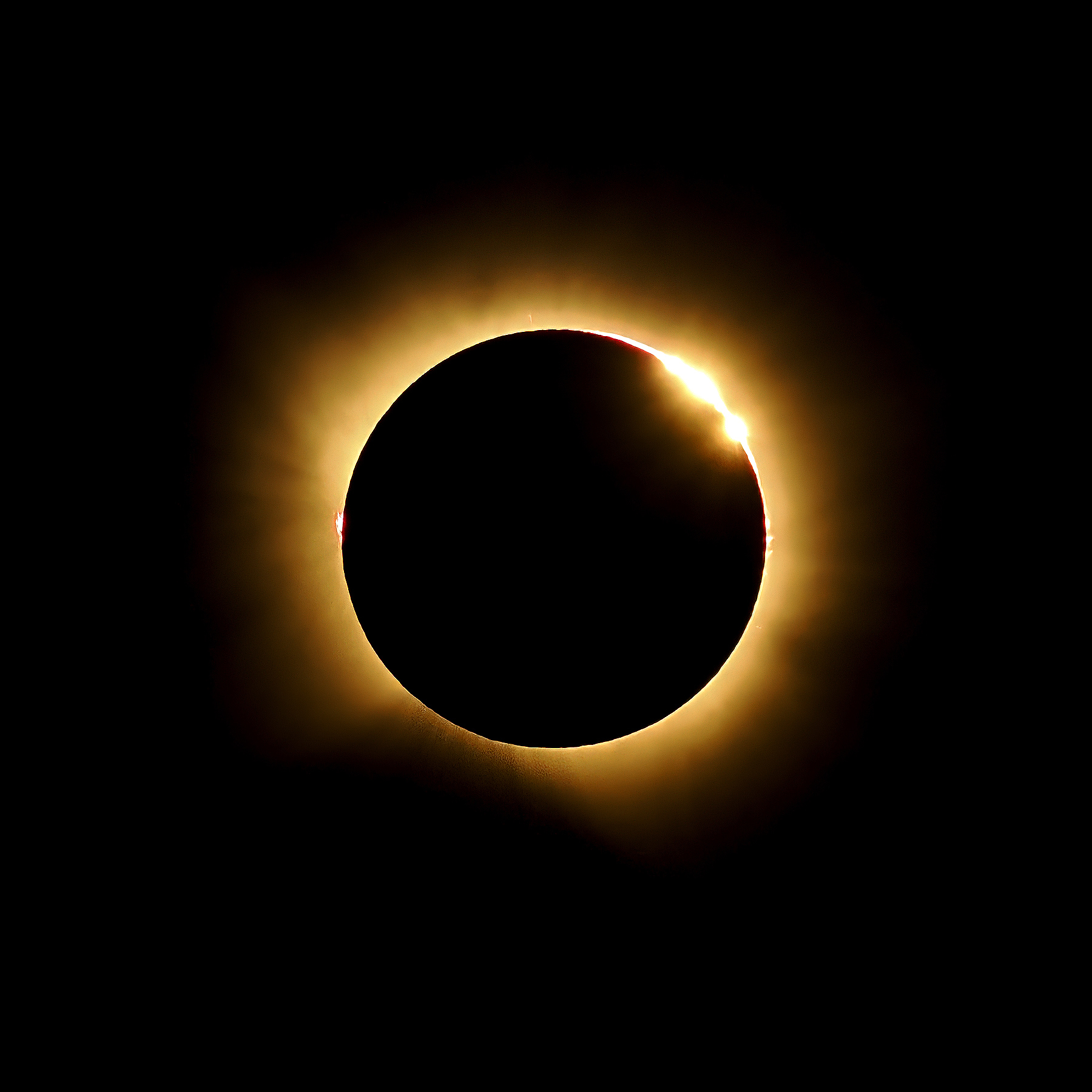
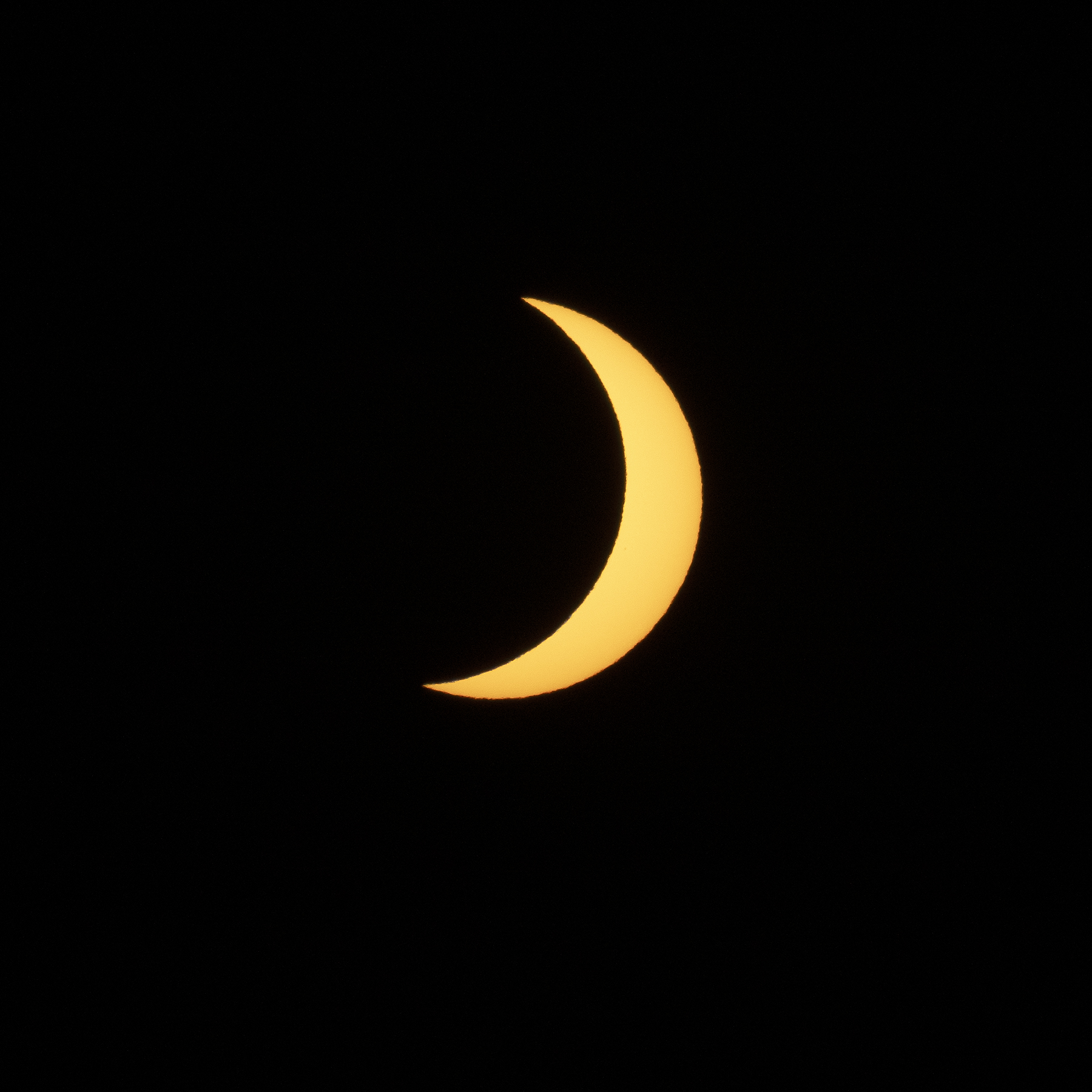
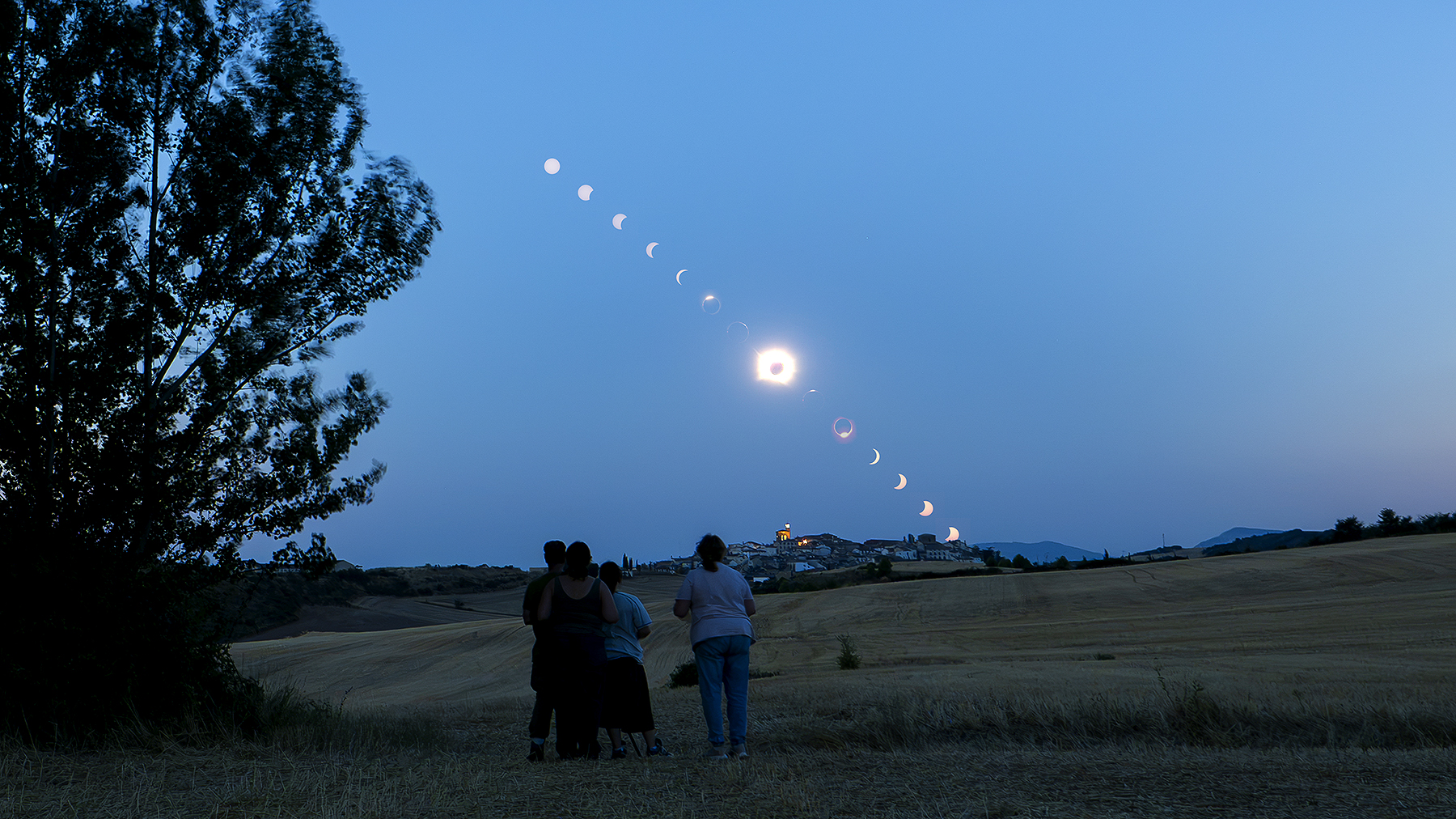
Pero quizá mi imagen favorita es una que he compuesto montando las distintas fases del eclipse sobre una de las imágenes que captó una de las cámaras que trabajaron automáticamente, que capta el momento de la totalidad y a mi familia acompañándome mirando hacia Cirauqui y el eclipse:
Si has llegado hasta aquí leyendo te lo agradezco mucho. Para mí fue una experiencia muy especial, y me hace ilusión poder compartirlo. Espero poder fotografiar los eclipses totales que vienen en 2027 y 2028, y mostrároslos.
English:
It’s been already a few days and I still can’t find the words to describe the experience I lived. I had never seen a TOTAL solar eclipse; a little over a year ago there was a partial one in my area, but it was a cloudy day and I hardly managed to take a couple of snapshots through the passing clouds. But a partial and a total eclipse are nothing like each other: a partial one is definitely something especial and out of the ordinary, sure, but watching and living the totality phase, even just for a few seconds, is something truly amazing. I will treasure those 40 seconds for the rest of my life.
I want to thank my family for having wanted to spend that evening with me, as we watched, and I also photographed, the eclipse.
I started preparing this eclipse about a year ago. First thing I needed was to make sure I had the eclipse day, as well as the day before and after, free of work, so I made sure of that from my job. Then it was time to start looking for a place where I would photograph the eclipse from, so I started scouting locations around Estella, where I live, looking for the right spot. I couldn’t really find any one that was quite right, and all the time this image popped up in my mind of the eclipsed sun falling down on Cirauqui, the beautiful village where I work. So I decided to focus on that option and started looking for the right, perfect spot, which would have to be from somewhere between Cirauqui and Mañeru, so that the sun would fall exactly on the tower of the San Román church of Cirauqui on August 12th. Nevertheless I did look for a couple of additional spots up to 100km from my area as «plan B», in case the weather wouldn’t cooperate in Cirauqui on the day of the eclipse. It was finally not necessary, as the sky was totally clear on August 12th over my selected spot.
This would be more of less the view of the village from the location I chose; for it to be perfect I just needed that they would have finished the reconstruction works of the roof of the Santa Catalina church, located on the right side of the village, by August 12th (and they did!):
Then it was time to start preparing for the technical part: I certainly had no idea of how to photograph a total solar eclipse, but I did think it was probably like nothing I had photographed before, not even a close up of the rising or setting sun or moon, such as the last picture in this post or the first one in this one.
So I started reading and watching lots and lots of blog and social networks posts, and mainly youtube video tutorials. Among all of the latter, the one that made all the difference was, a couple of weeks before the eclipse, this masterclass by Antoni Cladera in the Photopills youtube channel. If you ever would have to photograph a total eclipse I recommed you to watch that video, and not just once, as there is such a lot of information that you really need to rewatch it once and again, and even take notes. Plus Antoni was kind enough to reply my instagram messages and emails with questions, for which I will be for ever grateful to him.
I also got technical and personal support from another photographer and youtuber, Nacho Uliaque, whose channel and social networks I recommend following. Regarding the filter I would use during the partial phases, I want to thank Jorge Císcar, who also very kindly replied my emails with questions. Finally I want to thank the village of Cirauqui, as they accepted to collaborate with any thing I asked them for. Thank you all so much.
I hesitated but I finally decided to try to use all of my three cameras for this day; I knew it would mean more chances of something going wrong, but I just felt it was not right to leave one or two cameras unused during such an amazing astronomical event, without trying to squeeze something else (photographically) out of it. So I decided to go for it and place two cameras on tripods, taking pictures sequentially, with hardly any of my time: if something came out of that then great, and if not well… at least I would have tried!
I would be focused mostly on a third camera on a tripod, with a tele lens pointed into the sun to photograph all of the phases of the eclipse, since it would start at 19.32h until the sun would hide behind the village shortly after 21.00h, still partially eclipsed. I had to rush twice to check on the two other cameras in case they needed a new battery or memory cards or something would be going wrong with them, but other than a small issue, all went fine.
Here are some pics of that evening, starting with this one of the eclipsed sun about to set on the tower of the San Román church of Cirauqui:
The previous image is one of the ones that make up for this timelapse video:
Here are some pictures showing the sequence of the phases of the eclipse:
But my favourite image is probably the one I composed overlaying the different phases of the eclipse on a photograph taken during totality, with my family and myself looking towards Cirauqui and the eclipse:
If you got this far reading I really appreciate. It was a very especial experience for me and I am happy to share it. I hope to be able to watch and photograph the upcoming eclipses of 2027 and 2028, and share them here as well.