
Lunasticio de 2025 / Major Lunar Standstill of 2025
(for English please scroll to the bottom of the page)
¿Sabíais que la luna sigue un ciclo que dura algo más de 18 años? ¿Y que debido a eso, solo una vez cada esos 18 años tiene su punto de salida y puesta más al norte y sur que los habituales? Yo supe todo esto este año a raíz de un vídeo explicativo de los amigos de Photopills, que podéis ver aquí para comprender mejor el fenómeno.
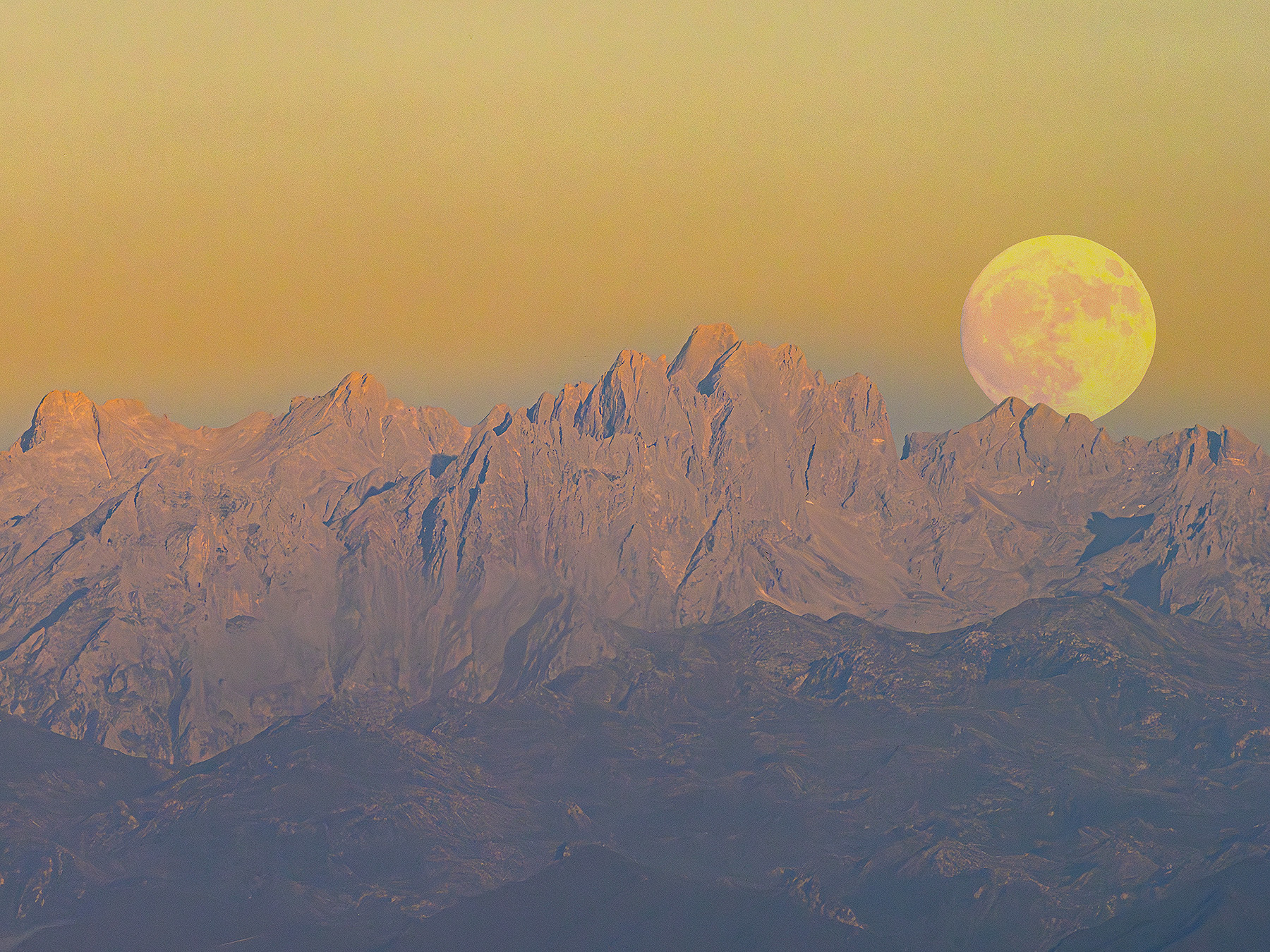
El caso es que el fenómeno se daba a la salida de luna llena del mes de julio, y me pilló por tierras asturianas; así que exploré varios posibles lugares para una foto de la salida de la luna del 9 de julio, y finalmente me decanté por la luna saliendo tras los Picos de Europa, tomada desde el Mirador del Fitu, cerca de Caravia. La distancia entre el punto de disparo y la montaña tras la que sale la luna es de 40km en línea recta. Espero que os guste.
English:
Did you know that the moon orbits the Earth in a cycle that it needs over 18 years to complete, and that due to this, once every those 18 years (approximately) it rises and sets more North and South than it does all other days in that time period? I found out about all this just this year through a video from our friends of Photopills, which you can check out here to better understand this phenomenon.
It so happened that the full moon rise of last July, just when the phenomenon took place, found me in Asturias; so I explored different locations for a nice image on the moon rise of July 9th, and I finally decided to try for the moon rising behind the Picos de Europa, taken from the Mirador del Fitu, near Caravia. The distance between where I was standing and the mountain the moon is rising over is of 40km in straight line. I hope you like it!