
¿Es este el Lizarrahenge? / Is this the Estellahenge?
(for English please scroll to the bottom of the page)
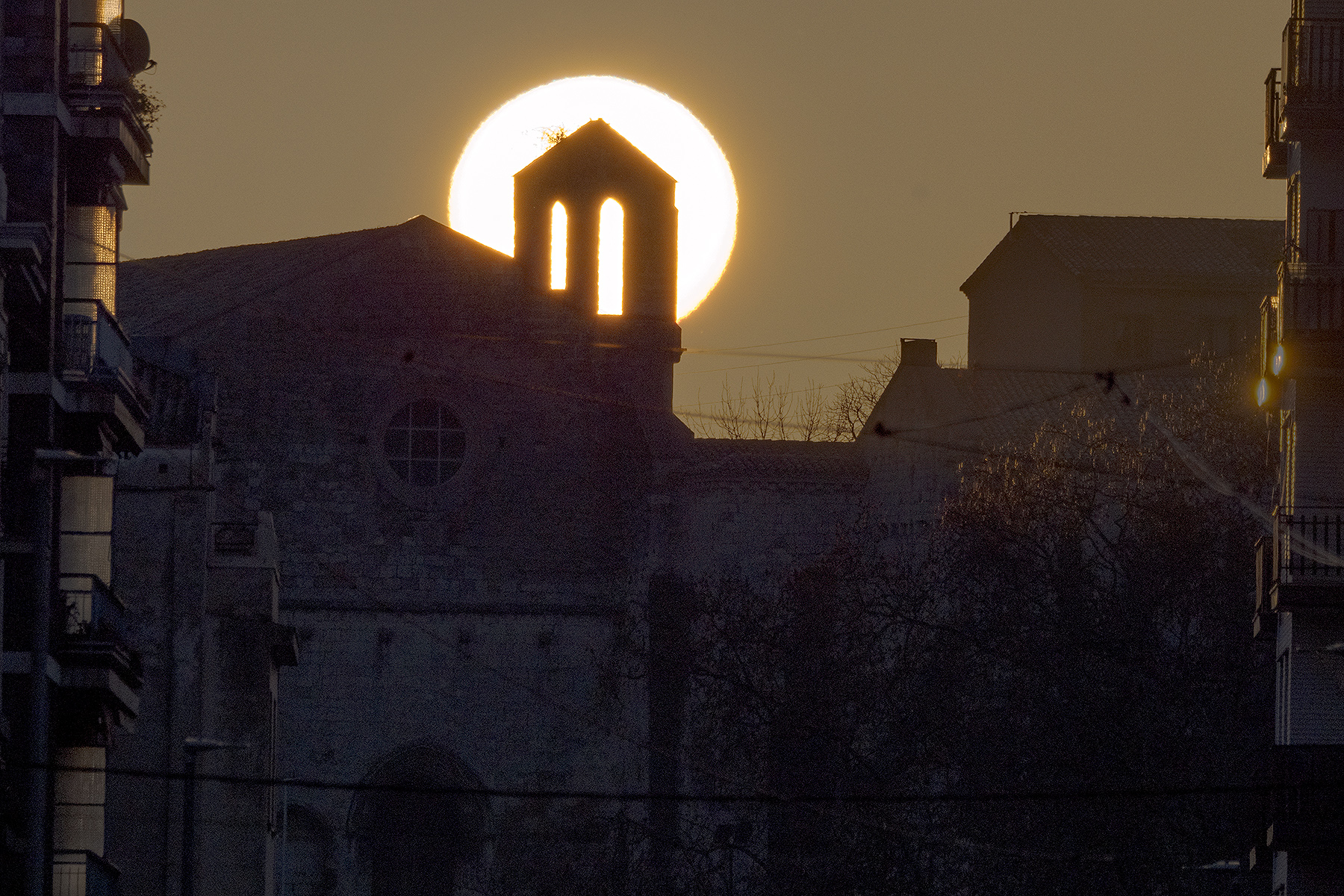
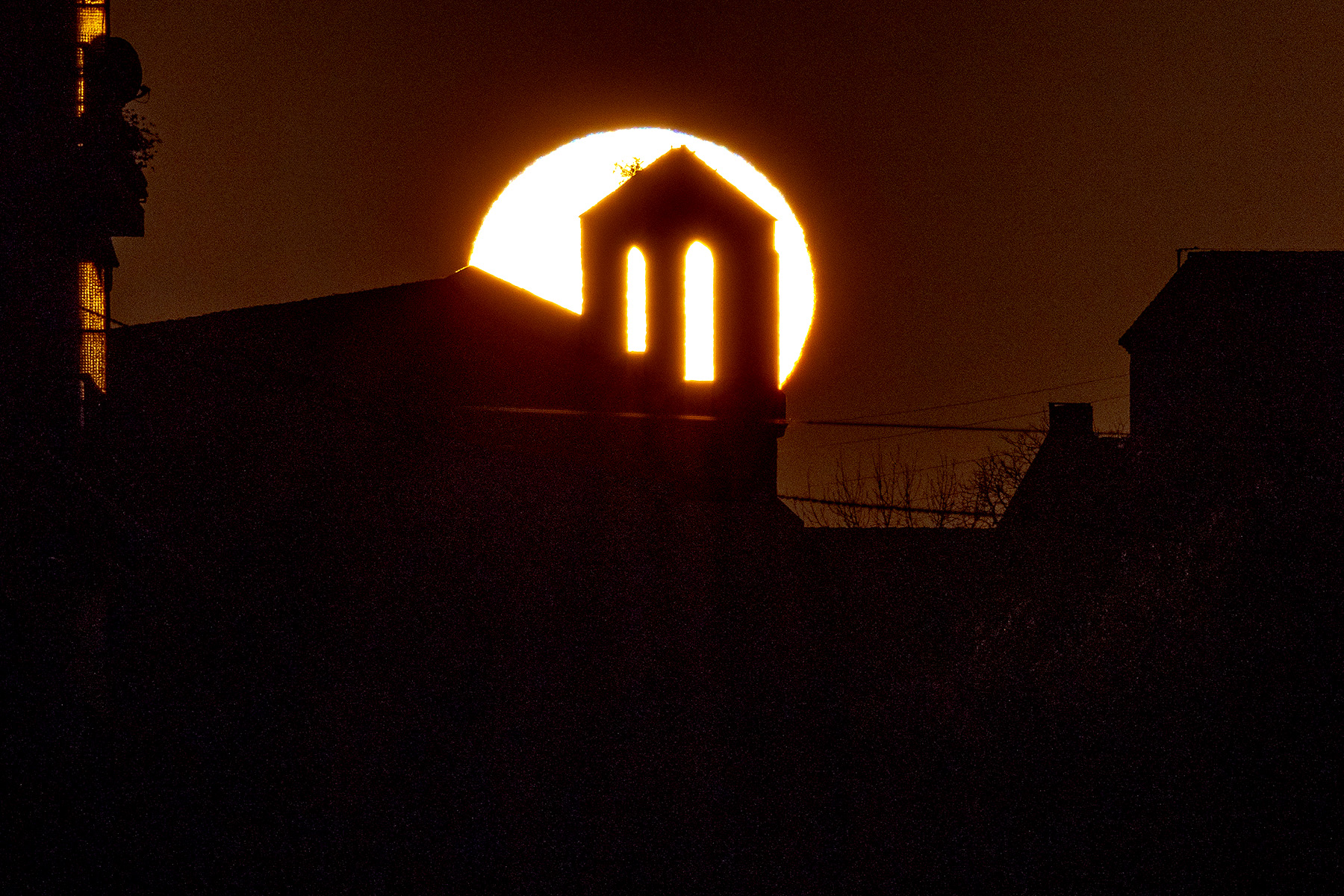
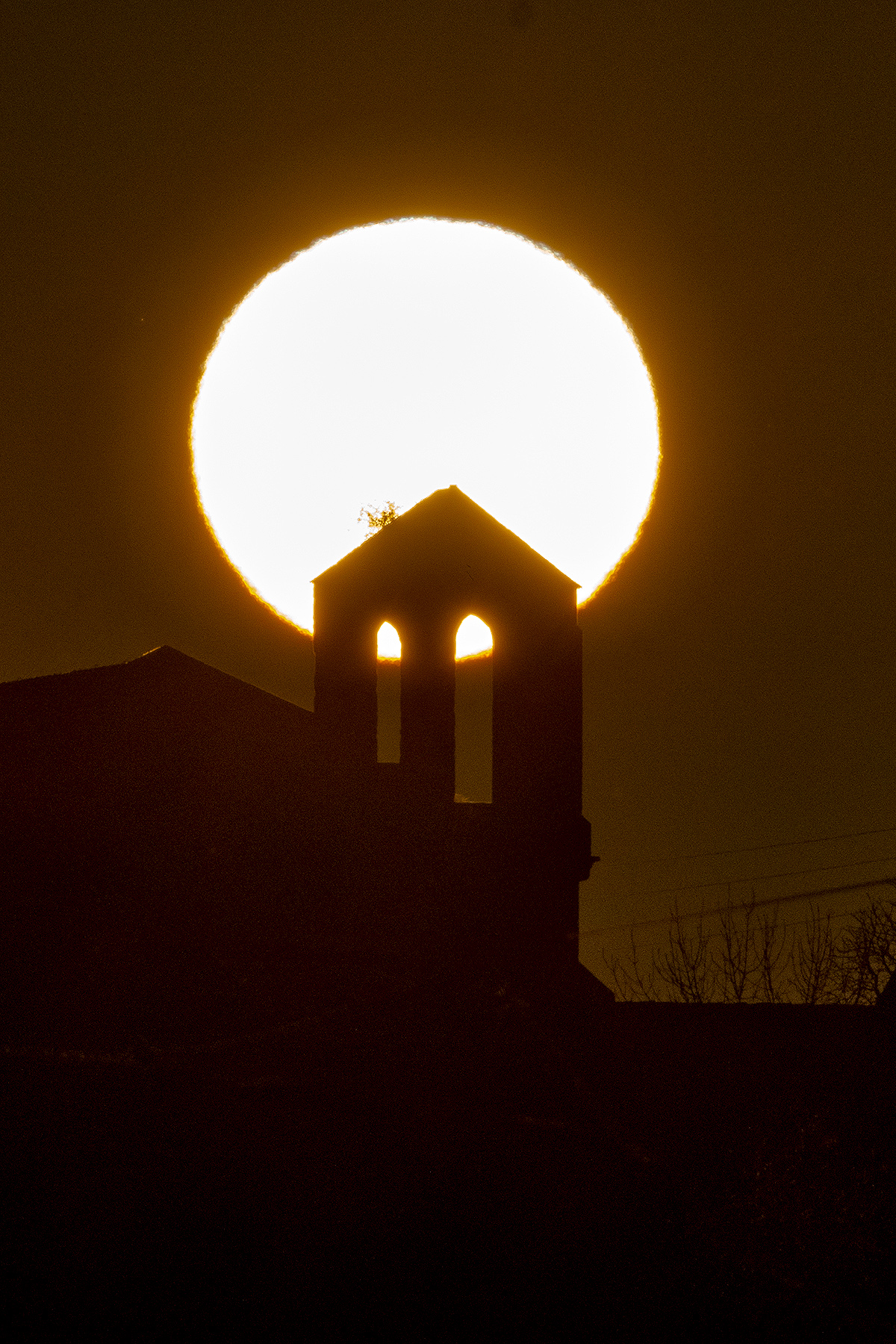
Si seguís mi blog o redes sociales quizá recordéis que hace unos meses, en el post de la luna llena de septiembre de 2024, comenté que llevaba tiempo pensando hacer la foto de la luna llena saliendo justo tras la torre del Convento de Santo Domingo de Estella, la ciudad donde vivo. Esa foto sigue en mi lista de imágenes aún por tomar – y la tomaré – pero hace pocos días, paseando por la zona, me fijé que el sol, que había salido unos 30 minutos antes, debía haberse alineado, más o menos, con la torre del convento. Así que al día siguiente estuve allí unos minutos antes de la hora indicada y me preparé para tomar la imagen del sol saliendo tras la torre del convento. Hubo suerte y ese era el día exacto y preciso para la imagen del sol centrado sobre la torre del convento, pues el día anterior seguramente habría quedado un pelín demasiado a la derecha, y al día siguiente quedaría un poco demasiado a la izquierda. Esta es la imagen que tomé ese día en cuestión:
Este hecho me hizo recordar el conocido como Manhattanhenge que descubrió el astrofísico Neil deGrasse Tyson, y del que si no lo conoces, puedes informarte aquí (es un vídeo muy cortito y fácil de entender, aunque está en inglés); por cierto, recomiendo encarecidamente seguir a este hombre en su canal de youtube Star Talk: ¡sus vídeos son muy interesantes!
Volviendo al Manhattanhenge, y brevemente explicado, consiste en que el sol se pone en un punto exacto alineado con la cuadriculada red urbana de Nueva York dos días concretos del año, de forma que solo se puede ver/fotografiar la puesta de sol al final de la calle – entre la línea de edificios de derecha e izquierda – esos dos días. El nombre se lo puso aunando las palabras Manhattan y Stonehenge, ruinas en las que el sol se pone alineado entre sus rocas justo en el solsticio de verano y de invierno.
Como sabrás el sol sale por el este y se pone por el oeste, pero no es así de exacto, o no lo es al menos todos los días del año: únicamente sale por el punto exacto del Este y se pone por el punto exacto del Oeste dos días del año: los de equinoccio de primavera y equinoccio de otoño; el resto de días del año sale y se pone más al sur o al norte de esos puntos concretos, aunque siempre dentro de una orientación general de Este y Oeste (de ahí la generalización).
Concretamente en Estella, y dada la «inclinación» que presenta el eje más o menos recto del Paseo de la Inmaculada respecto a una línea paralela al Ecuador terrestre, que haría de eje Este-Oeste, el sol sale justo por detrás del Convento de Santo Domingo dos días del año, siendo uno de ellos a principios de febrero, que es el que aquí os traigo. El otro día debe ser, calculo, hacia finales de octubre o principios de noviembre (lo comprobaré a finales de este año y os lo contaré).
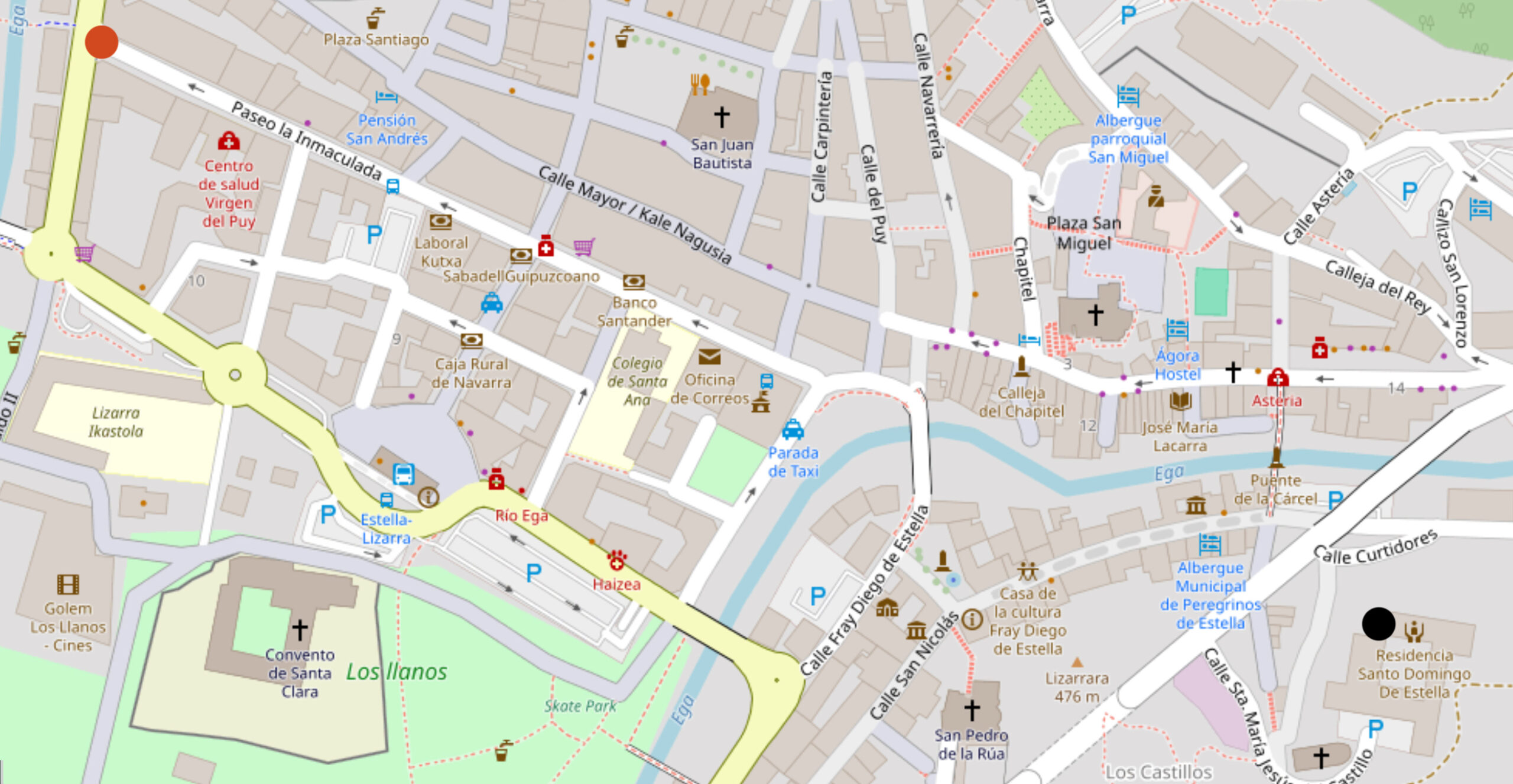
En la imagen que sigue os muestro el convento (punto negro abajo a la derecha) y el punto desde el que tomé la imagen (punto rojo arriba a la izquierda), que es el punto más alejado y que por tanto nos da el mayor tamaño relativo del sol respecto al convento:
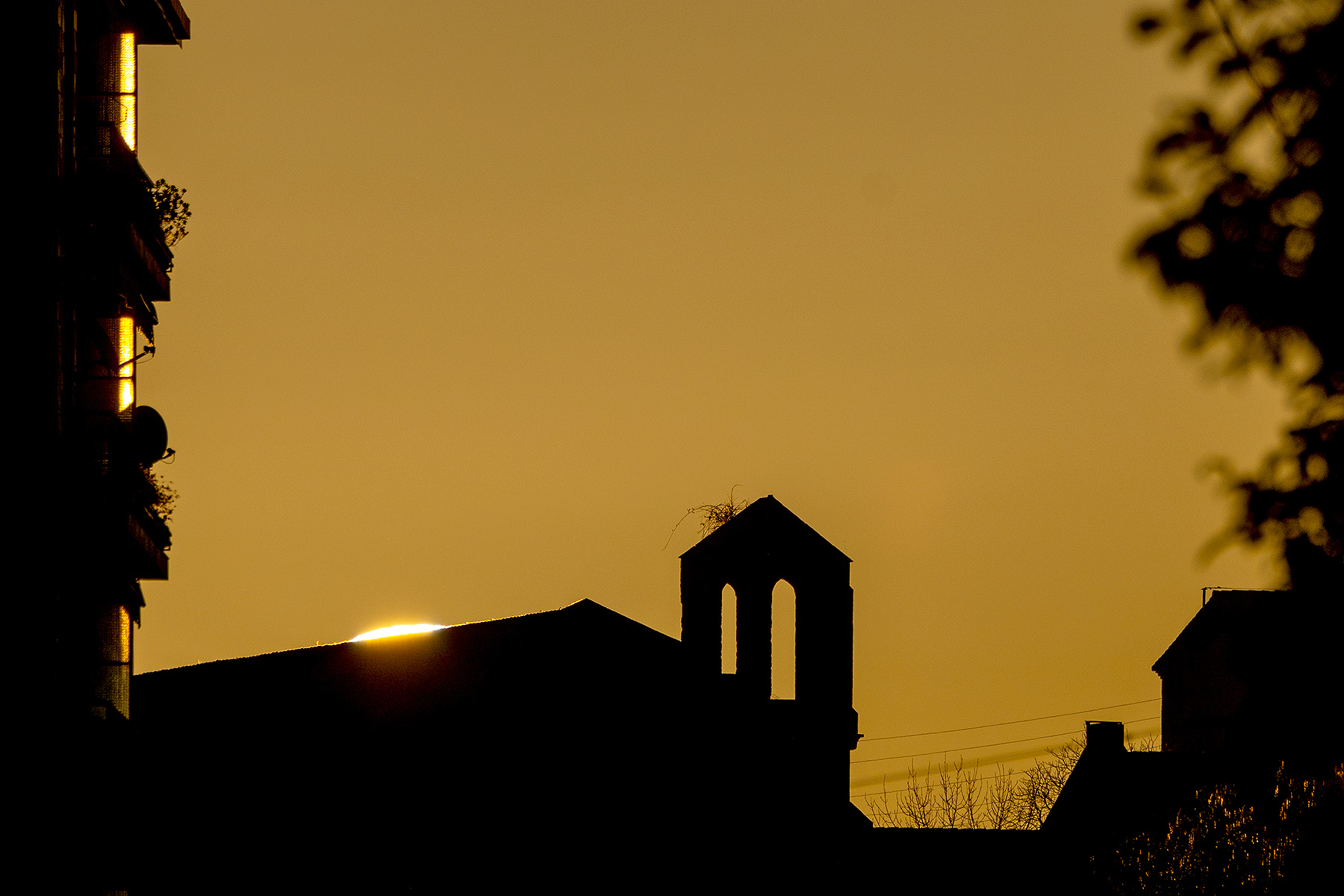
Aquí os dejo algunas fotos más, tomadas al día siguiente de la anterior variando ligeramente el punto de la toma hacia la derecha, a pesar de lo cuál se aprecia claramente que el sol sale más a la izquierda (al norte) de la torre que el día anterior, y por tanto la alineación no es tan perfecta:
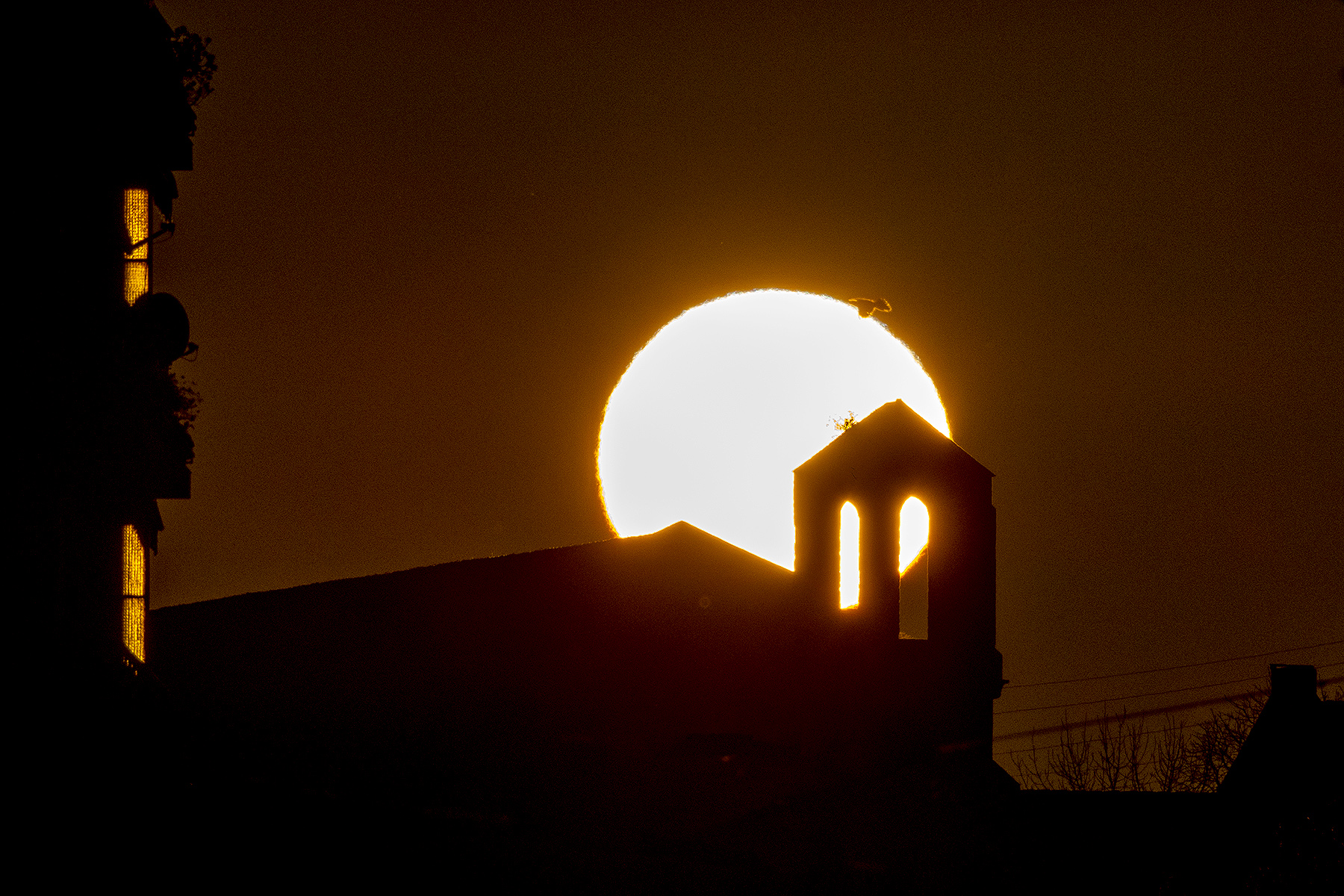
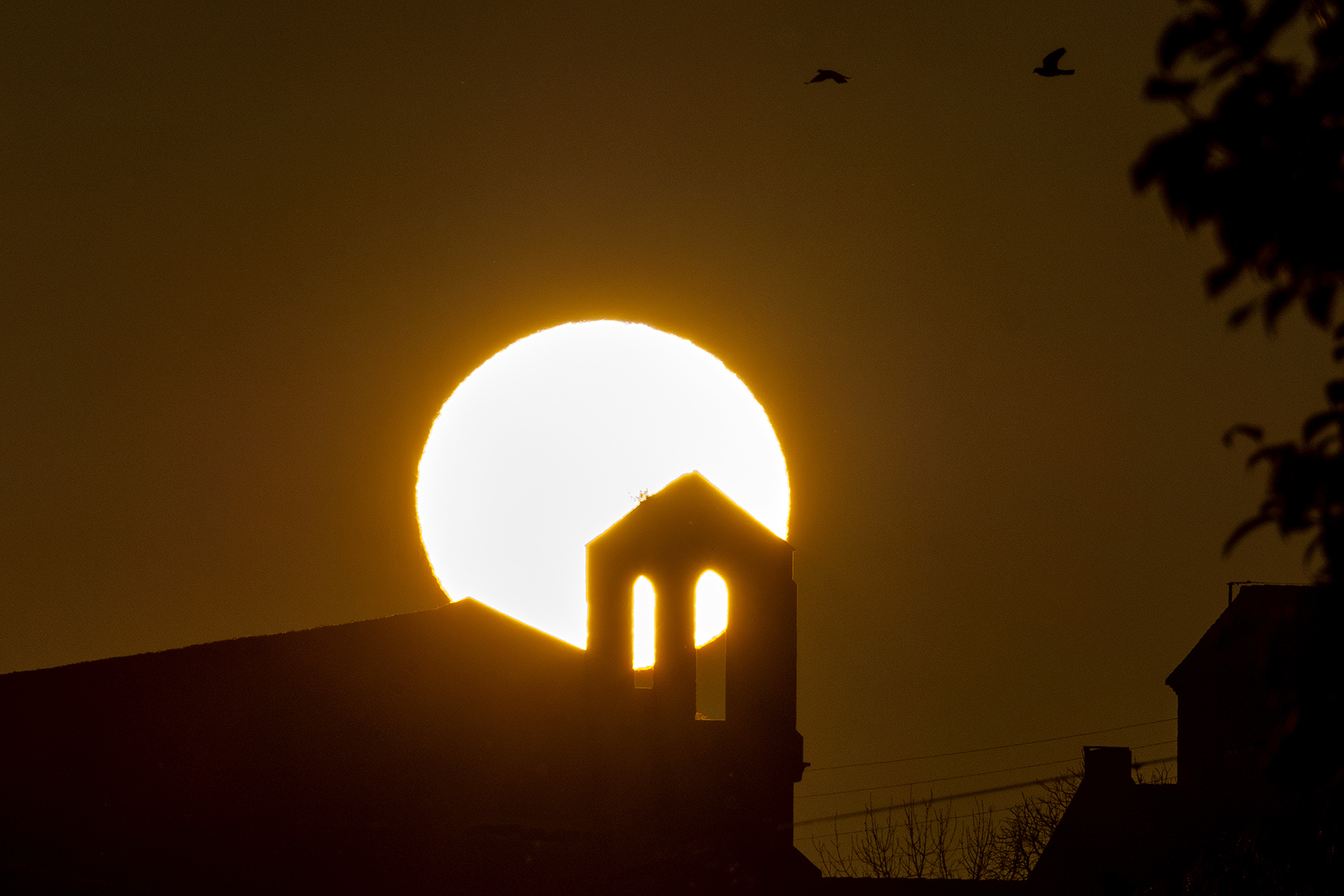
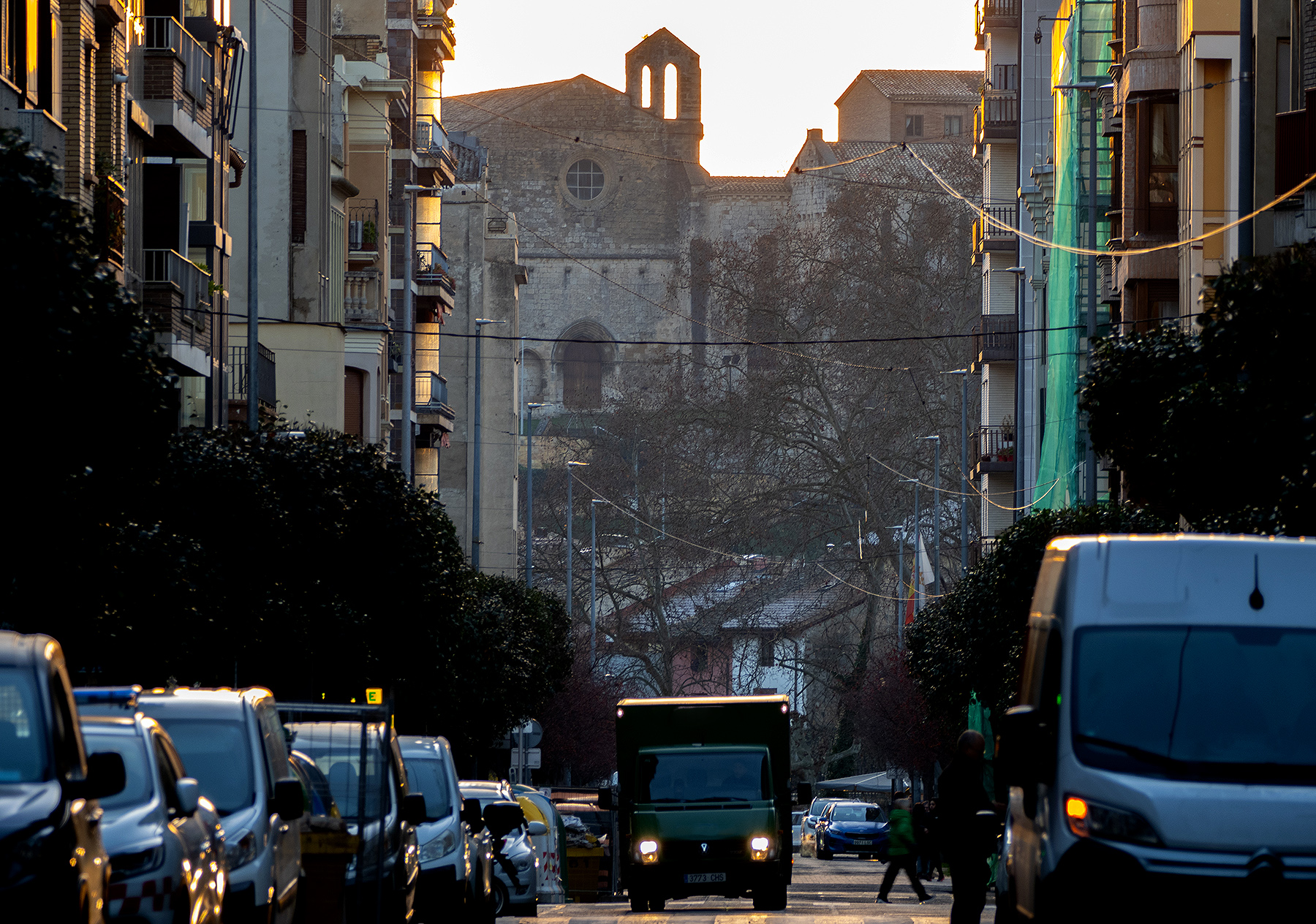
Decir que la toma en sí requiere de algo de paciencia para encontrar el punto exacto en que la alineación del sol con la torre sea buena pero a la vez no estés en medio de la calzada ni se interponga en la toma ninguna farola, árbol, cables eléctricos, o se ponga justo en medio de tu línea de disparo una furgoneta de reparto o una ambulancia:
He de decir, por si alguno os lo planteábais, que utilizo una aplicación para ayudarme en la planificación de este tipo de fotos. Los fotógrafos que solemos hacer este tipo de fotografía, así como de vía láctea, estrellas, luna, etc… la utilizamos muy habitualmente: se llama Photopills. Hay una o dos más similares, pero esta es probablemente la más popular.
Dado que el nombre completo de mi ciudad es Estella-Lizarra, ¿creéis que deberíamos bautizar a este fenómeno como Lizarrahenge, o Estellahenge?
English:
Is this the Estellahenge?
If you follow my blog or social networks you might remember that some months ago, in my post about the September full moon, I mentioned how I had been wanting to take a photo of the full moon rising right behind the tower of the Convento de Santo Domingo of Estella, the city where I live. That photo is still on my bucket list – I promise to finally take it sometime soon – but a few days ago as I walked past the area I noticed how the sun, that had already risen about half an hour earlier, had probably been in rough alignment with the tower shortly after sunrise. So the next day I headed there some minutes before what I expected would be the right time and got prepared to take the image of the sun right behind the tower of the building shortly after sunrise. I got lucky and that one day happened to be the exact day for the photograph. The previous day the sun would have probably been a little bit too much to the right, and the next day it would probably be a little too much to the left. This is the image I took this day:
This whole thing reminded me of the so called Manhattanhenge, which was discovered by astrophysicist Neil deGrasse Tyson, and about which you can get some more information here (it’s a very short and explanatory video); by the way, I very much encourage everyone to follow Neil on his youtube channel Star Talk: his videos are really interesting!
Back to the Manhattanhenge, put in a very simple way, it’s how the sun sets in a very specific point aligned with Manhattan’s city street grid on two specific days of the year. Only on those two days can you watch/photograph the sun setting right at the center of the street’s end, between both lines of buildings to left and right. The name was given by mixing the words Manhattan and Stonehenge, ruins where the sun sets aligned between its rocks exactly on the Summer and Winter solstice days.
As you know the sun rises in the East and sets in the West, but that is not exact, or at least not every day of the year: it only rises due East and sets due West two days of the year: those of the Spring and Autumn equinoxes. All other days of the year it will rise and set more northerly or southerly from those exact points, although always within an overall East and West direction (therefore the generalization).
In Estella, and given the «inclination» of the Paseo de la Inmaculada (one of its main, central streets) when compared to a East-West line that would be paralell to Earth’s equator, the sun rises just behind the tower of the Convento de Santo Domingo two days of the year, one of them being in early February, which is the one I bring you here. The other day is, I believe, around late October or early November (I will check later this year and let you know!).
In the next image you can see the convento (black dot bottom right) and the place from where I was standing to take the photograph (red dot on the top left), which is the furthest away possible spot so that we get the best size ratio between the sun and the building:
Here are some more photos taken the next day; even though I changed the spot for taking the picture slightly to my right, you can still tell how the sun is more left (North) compared to the tower than it was the previous day:
Capturing this photograph requires some patience in order to find the exact spot where the alignment of the sun and the tower is good enough and at the same time to make sure you are not standing on the street where you can be run over by a car, there are no light posts, tree branches or electrical wires in the way of your shot, and no ambulance or delivery van totally blocks your view.
I must say, if anyone was wondering, that I use an app to help me plan this kind of photos. Photographers who do this type of photography often, as well as stars, milky way, moon, etc… use this app a lot: it’s called Photopills. There are one or two other similar ones but this one is probably the most popular one.
With the full name of the city where I live being Estella-Lizarra, do you think we should call this the Estellahenge?